
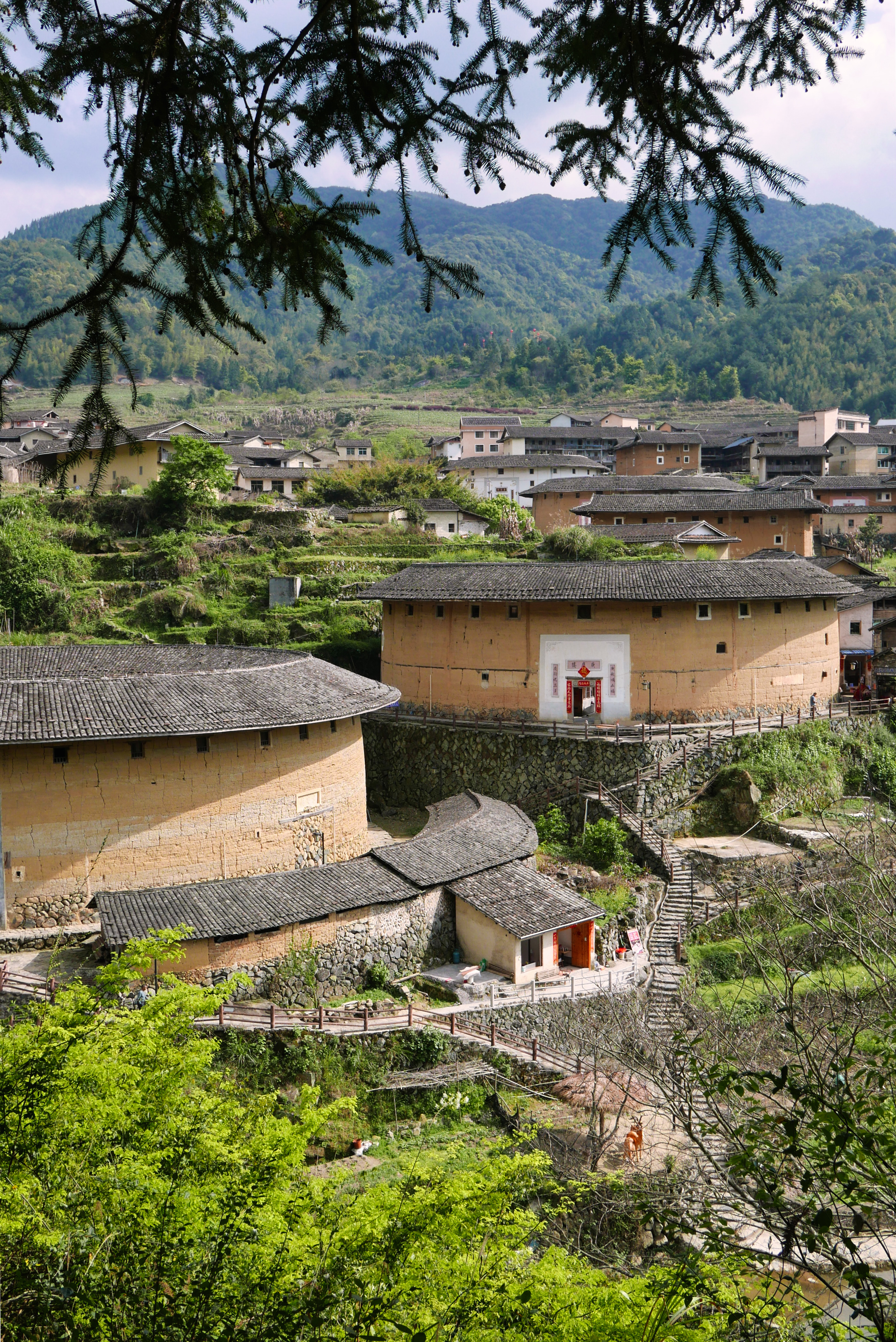
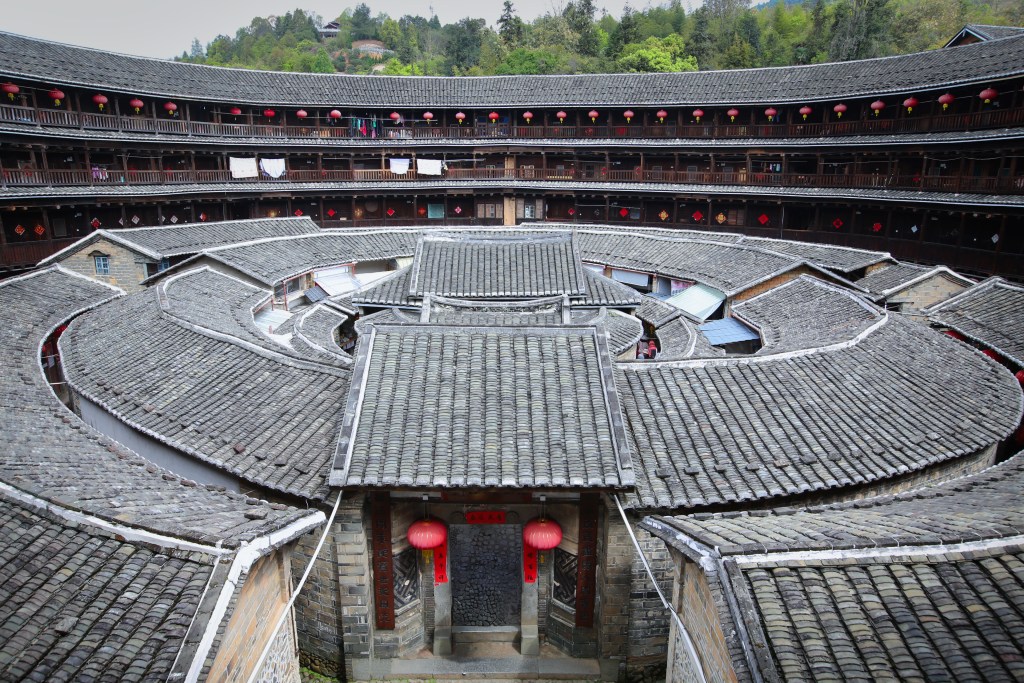
Nestled in the lush valleys of southwestern Fujian, tulou are earthen housing complexes invented by the Hakka people. They have distinctive architecture and function, resembling mini fortresses where hundreds of people live together in one cohesive community.
I first learned the concept of tulou (土楼), or earthen structures, through the captivating Chinese animated film Big Fish and Begonia. The movie features mystical beings that can traverse between worlds by transforming into red dolphins, and they reside in circular houses inspired by tulou. Later, in the live-action remake of Disney’s Mulan, tulou is once again chosen as the residence of the titular character. The unique architecture transports the audience to a different time and space, evoking a sense of wonder and fascination.
In reality, these curious constructions are home to the Hakka, originally a migratory group that settled in the mountains of southwestern Fujian. They developed tulou to fulfill their defense needs against invaders and for communal living. As a result, hundreds of these fortified villages emerged across the region between the 15th and early 20th centuries.
Like a mini fortress, tulou reflects the wisdom and resilience of the Hakka people.
While many Fujian tulou remain untouched relics of the past, 46 properties gained international attention when they were designated World Heritage Sites in 2008. These earthen houses differ in size, shape, and interior. But they collectively reflect the ingenuity and resilience of the Hakka people, whose communal approach to settlement remains functional today.


1. The Walls of Fujian Tulou
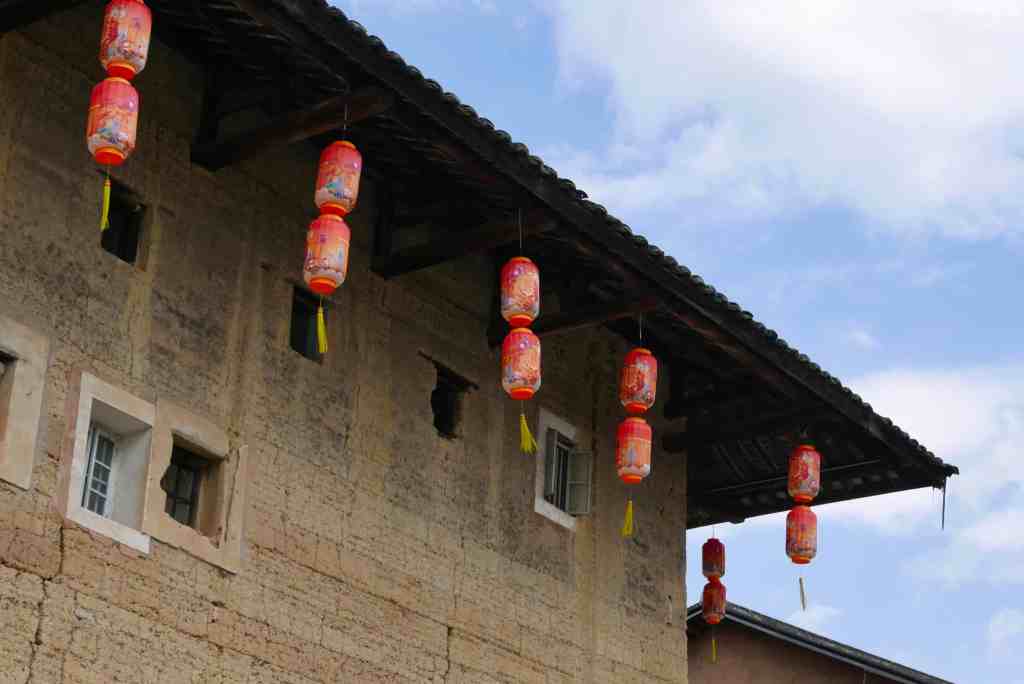
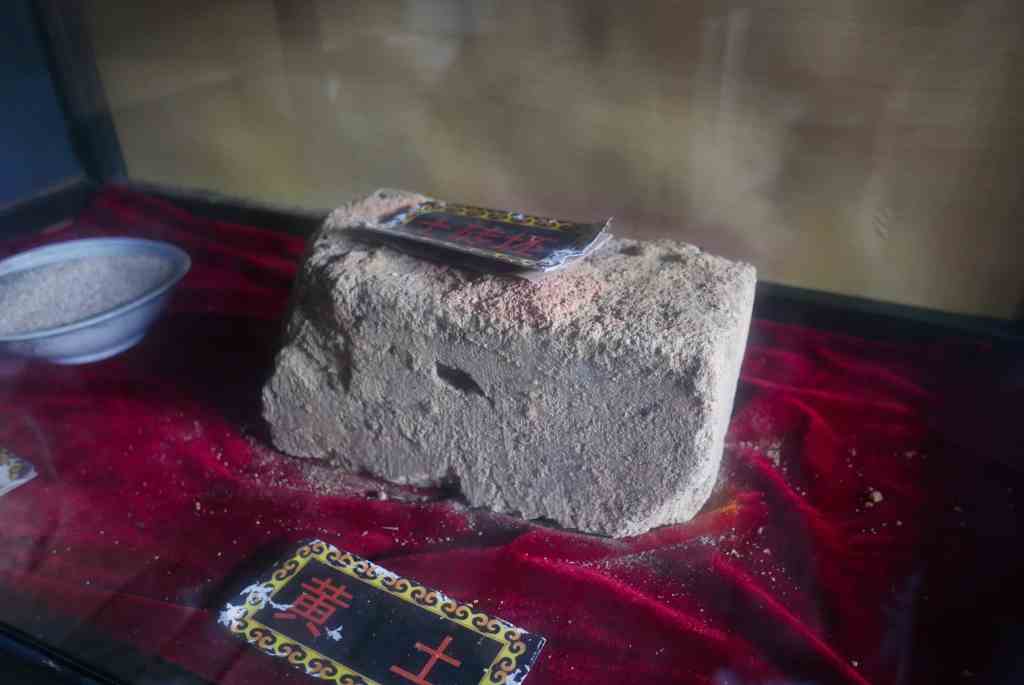
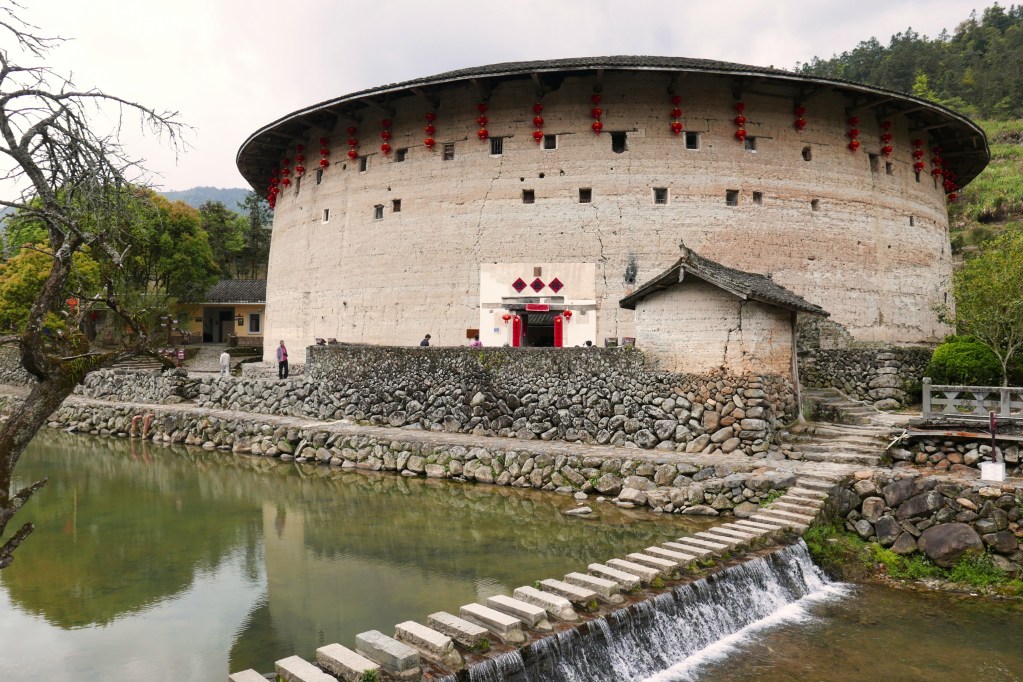
For the Hakka (客家人), or “guest people”, survival meant being ready for confrontations. That’s why they developed tulou that function as apartment buildings and strongholds. Typically ranging from three to five stories high, these structures often have rectangular or circular layouts with black-tiled roofs over thick rammed earth walls. They were resilient against fire, arrows, gunshots, and even cannonballs. These walls were also easily repairable, consisting solely of natural materials, including mud, sand, lime, and surprisingly glutinous rice.
Although water posed a potential threat to tulou, this risk was mitigated by the extending roofline that radiated outward. Only a large entryway was found at the wall, without any ground-level windows, ensuring that intruders could not easily breach. Furthermore, bamboo strips were implemented for lateral binding to maximize protection, rendering the walls as sturdy as Western castles. Many tulou even incorporated slits in their walls for mounting crossbows or rifles, while others had granite or cobble foundations to thwart digging efforts.



2. The Interior
In contrast to its stern and imposing exterior, the inside of the tulou was designed to function as a cozy village, completed with public wells and a spacious courtyard. It is primarily constructed of wood, often without a single nail, and features an inward-looking circular or square floor plan. This thoughtful design ensures that every apartment enjoys ample natural light and ventilation but also provides protection against the elements. At the center of the tulou lies the ancestral hall, which also serves as a mutual ground for meetings and events, reinforcing the sense of community within. It’s usually beautifully adorned with traditional carvings.
Tulou emphasizes egalitarianism and mutual respect.
Unlike many housing complexes that reflect social hierarchy, Fujian tulou emphasizes egalitarianism and mutual respect. Each family owns an identical vertical section of the building, from the ground floor to the penthouse, whereas a large family would have two or three vertical sets. Typically containing two or three rooms, each floor serves a specific purpose: the ground floor is the kitchen, the second floor contains grain storage, and the upper floors feature living quarters and bedrooms. All apartments are equal in size and built with the same grade of materials. Even exterior decorations, from window styles to door ornaments, are uniform.
While all tulou share a similar interior design, each community exhibits features that make them unique. Some include two or three concentric rings, while massive structures like Chengqi Lou can have as many as four. Some more luxurious tulou, such as Yuchang Tulou, enhance the living conditions of its residents with in-house water wells next to the stove for each household. Meanwhile, newer tulou integrate Western elements into the architecture. For example, the Zhencheng Lou, built in the 1920s, proudly displays elegant Greek-style columns and intricate wrought iron railings. These variations not only reveal the creativity of the Hakka people but also highlight their rich cultural heritage.




Tips for Visiting Fujian Tulou
- The tulou are located throughout the mountainous region of southwestern Fujian. They concentrate mainly in “tulou county”, which includes western Nanjing County, eastern Yongding County, and western Pinghe County. The only way to reach this area is by driving along winding mountain roads. While the road conditions are generally good, some sections are narrow, particularly when passing through villages. From Xiamen, it takes approximately two hours to drive to the tulou sites.
- The nearest high-speed train stations to the tulou are Longyan and Nanjing (be careful not to confuse this with Nanjing City when purchasing tickets). The train journey from Xiamen to these stations takes about 45 minutes. There are also direct trains to Shanghai and Guangzhou, but these services are infrequent. Regardless, having a vehicle is essential for exploring the area.
- Entry tickets can be purchased at the entrance of each tulou or tulou cluster. Due to the size of some sites, it is advisable to buy additional tickets for electric buggies.
- Most of the tulou are still inhabited by locals. As a result, the upper floors, which serve as living quarters, are often off-limits to visitors, except for the Jiqing Lou in the Chuxi Tulou Cluster.


Since the first time I learned about them, I have been curious about tulou. It’s unlike anything I have ever seen. There is a Hakka museum in Jakarta and it was modelled after a tulou. I haven’t been there, but I’m pretty sure they didn’t use sticky rice in the construction. How cool that you have seen the original ones in Fujian.
Just googled the museum. It’s definitely a tulou but made of contemporary materials 🙂 I think I saw a similar one in Fujian. The Hakka from abroad built it when they re-visited their hometown. But I wonder whether the structure is as sturdy as the original one.
I haven’t heard of these homes/fortified villages before. How fascinating. From the first picture I didn’t realize they are so large but can see their size in other pictures. They really are interesting. Maggie
My guide told me that because of its size and round shape, the Americans used to mistake it for nuclear silos (based on the satellite images) 🙂 So they sent spies to investigate. That’s how the tulou became known to the outside world. The story might not be true, but it’s amusing nevertheless.
Amusing and very believable!